
· Dane Whitlock
Coffee grounds and fruit flies: what they are actually eating
They are not eating coffee. They are eating the yeast growing on it, which is why damp spent grounds behave like any other fermenting material in a kitchen. The University of Kentucky puts the requirement for development at a moist film of fermenting material — so emptying the heap and rinsing the film both matter.
The question arrives in late summer, when the fruit bowl, the caddy and the coffee are all working at once. It has a specific answer, and the answer is about what spent coffee becomes after a day on a counter rather than about what it is when it leaves the portafilter.
What the flies are actually eating
Start with the insect, because the name people use for it is doing some damage. What we call fruit flies are, in the words of Phil Pellitteri of the UW Insect Diagnostic Lab, flies from the genus Drosophila. The same document is precise about the food: larvae feed on the yeast associated with the decaying or fermenting material.
That single sentence reorganises the whole problem. The fly is not drawn to fruit because it is fruit, and it is not drawn to coffee because it is coffee. It is drawn to the yeast that colonises anything sweet, wet and organic once it starts to break down. Fruit is simply the most common thing in a house that reaches that state on a kitchen counter.
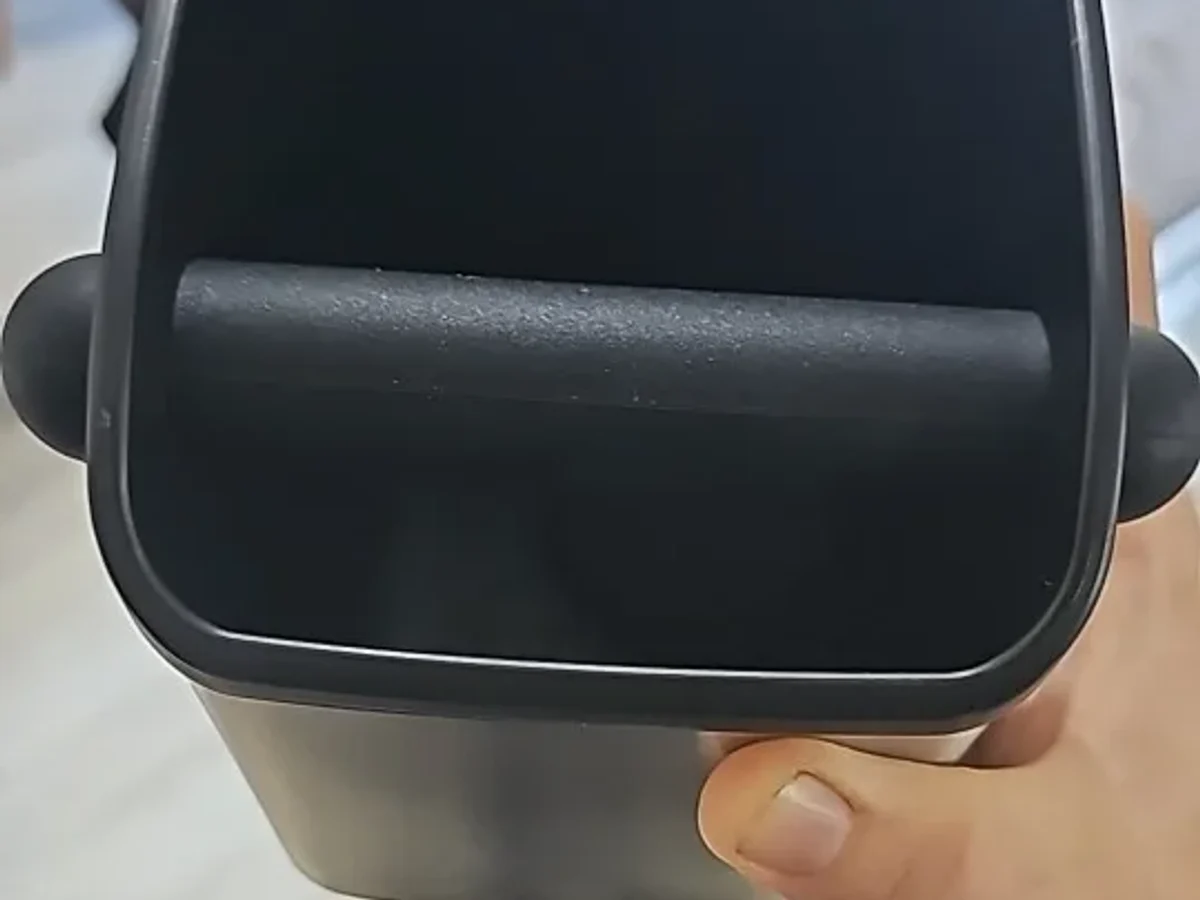
Spent espresso reaches the same state on the same counter. A puck leaves the machine warm and saturated, and warm damp coffee ferments — in stainless steel, in plastic, in ceramic and in wood alike. It is a property of the grounds rather than of any container. The consequence follows: fermentation is exactly the condition the fly is looking for, so the two facts are the same fact seen from two ends.
It also explains the timing. The flies show up in August and September in most kitchens, when the fruit bowl and the compost caddy are both busiest, and coffee is only one of several things fermenting at once. Working out which one is feeding them is the actual task.
Why damp grounds qualify as a breeding site
Michael F. Potter, Extension Entomologist at the University of Kentucky College of Agriculture, sets out the requirement in ENTFACT-621 in one line: all that is needed for development is a moist film of fermenting material.
Read that as a specification and it becomes useful. It does not ask for a pile. It does not ask for fruit. It asks for three things — moisture, fermentation, and a surface. The same document lists where that specification gets met indoors, and the list is instructive because none of the entries are food: drains, garbage disposals, empty bottles and cans, trash containers, mops and cleaning rags.
Every item on that list is a place where a residue sits damp for a few days. A container of spent grounds left standing on a counter meets the same three conditions, which is the mechanical answer to the question this article opens with. Not because a knock box is unusual, but because it is a container in a kitchen, and the specification is that permissive.
Which is also why the answer is not to stop making espresso, and not to move the box. The specification has a weak point built into it: it requires the material to still be there. Take the material away on a schedule shorter than the insect's, and the site never becomes a site.
The film, and why tipping it out is only half of it
Here is the part that catches people who are already doing the right thing.
Potter's description of the larvae is that they continue to feed near the surface of the fermenting mass. The mass is what you tip into the compost. The surface, in a container that has held wet coffee, is not only the mass — it is also the inside wall, the underside of the rim, and the seam where two parts meet. A tip-out empties the first and leaves the second.
For most of a week this makes no difference at all. Coffee residue on a dry steel wall is not fermenting anything. It matters in exactly one situation: the box that gets emptied but never rinsed, where each morning's tip-out leaves a thin damp layer that the next morning's grounds sit on top of and rewet. That layer is not a heap, it is a film, and a film is what the specification asks for.
This is why the daily routine is two movements rather than one — empty, then rinse under hot water. It takes the same ten seconds either way, and the second movement is the one that answers the insect. The full version, including the wash with dish soap every few weeks that takes off the coffee oil, is in how to clean a knock box.
Material decides how forgiving that is. On a sealed surface the residue sits on top of the steel and comes away with water. On raw wood, unsealed bamboo or scratched plastic, coffee oil soaks into the material itself, and a rinse reaches the surface but not the inside — the difference set out in wood versus stainless steel.
The bar seat is where a rinse does not flush
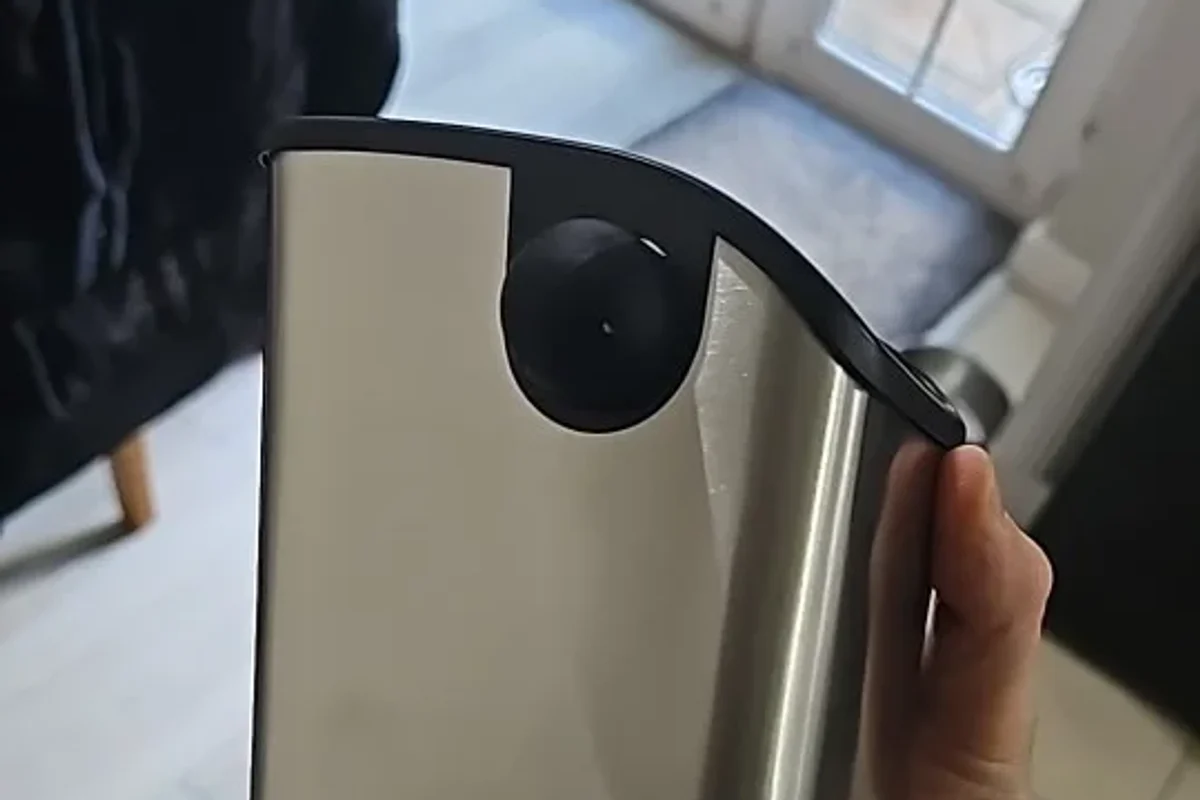
If one spot on a knock box is going to hold a damp film through a rinse, it is the seat the knock bar sits in.
The reason is mechanical and easy to miss. A strike throws a small amount of very fine coffee sideways rather than straight down, and those fines settle into the gap between the bar and the body. The gap holds them by capillary action along with a little water, and it is the one place a rinse under the tap does not flush, because nothing flows through it. It is the first place a box smells; the fly question is the same physics arriving at a different conclusion.
On a box where the bar lifts out, dealing with it is two seconds: run a thumb or a cloth along the seat while the bar is off. On a box where the bar is fixed, it cannot be done at all — the fines work underneath, sit there damp and out of reach, and the one part of the container that reliably stays wet is the one part the routine cannot reach.
That is the practical reason a removable bar matters more than any other detail on a knock box. It is not a convenience feature. It is what makes the second movement of the routine possible.
About a week, and what that does to the word “daily”
Two numbers from ENTFACT-621 explain why the interval matters more than the effort.
The first: the entire lifecycle from egg to adult can be completed in about a week. The second: they will lay about 500 eggs. Pellitteri's document at the UW Insect Diagnostic Lab gives the same order for the cycle, eight to ten days.
A week is a short generation, and it has a consequence people rarely draw. The flies in a kitchen in September are mostly not visitors that flew in through a window that morning. They are a generation that developed somewhere in the room, which is why the population appears suddenly and why swatting the adults changes so little. Potter's control instruction follows directly from the biology: all potential breeding areas must be located and eliminated.
Set the emptying interval against a week and the arithmetic is comfortable. Grounds that leave the kitchen every morning are never present long enough for a cycle to complete on them. Grounds emptied on most days, with a container that gets rinsed occasionally, are a different proposition — not because a day was skipped, but because the film survived the days that were not skipped.
This is the same daily habit the rest of the site recommends, arrived at from a completely different direction. It was already the answer for the smell, for the oil film and for the basket. The insect just gives it a deadline. The emptying itself, and where it sits in the rhythm of pulling two shots, is in how to use a knock box.
If they are around your houseplants, they are a different insect
Before changing anything in a coffee routine, check where the flies actually are, because two different insects get the same name in conversation and they come from different places.
The UC Statewide IPM Program describes fungus gnats — Orfelia and Bradysia species, family Sciaridae — as dark, delicate-looking flies similar in appearance to mosquitoes, and states that females lay tiny eggs in moist organic debris or potting soil. That is a different family from Drosophila, a different larval food, and above all a different source: the pot, not the counter.
The practical test is location. Small flies rising off the soil when you water a houseplant, or drifting around a windowsill of pots, are pointing at potting mix. Small flies hovering over a fruit bowl, a caddy, an open bottle or a container of spent grounds are pointing at something fermenting. The University of Kentucky's small-flies factsheet, ENTFACT-657, separates the two families for exactly this reason.
| Where you see them | What it points to | What changes it |
|---|---|---|
| Over a fruit bowl, a caddy, or a container of damp spent grounds | Something fermenting on the counter | Take the material away, and the film it leaves behind with it |
| Rising off the soil when you water a houseplant | Moist potting mix, a different family entirely | Soil moisture, dealt with at the pot rather than in the kitchen |
| Coming up out of a sink or a floor drain | Residue inside the drain, which ENTFACT-621 lists among the breeding sites | The drain itself — and grounds never go into it in the first place |
It matters because the correction is different in each case: soil moisture for one, the fermenting-material routine below for the other. Identify the source first, then act on it — and if both are running at once, deal with both.
Where the grounds go once they leave the kitchen
Emptying daily moves the question rather than closing it, so the destination is a decision to make once — and the destination is already covered in detail in what to do with used coffee grounds, which sets out compost, a garden bed and the household bin, and what each one asks of you.
What that article adds on this specific point is the container you use between collections. A sealed plastic tub kept warm on a counter is a fermentation with a lid on it; something that breathes lets the surface dry instead. If you keep a caddy indoors, the same specification applies to it that applies to everything else in this article, and the same fix: keep it cool, keep it open, empty it before a week is out.
One destination stays closed regardless. Grounds do not go down the sink, and not for any reason to do with insects — they do not dissolve, they bind with the grease already in the pipe and set in the trap, and a disposal grinds them finer so they travel further before they settle. That mechanism is laid out in why coffee grounds block drains.
The part that decides it
Everything above reduces to two movements each morning: tip the grounds out, rinse the body and the bar under hot water. Ten seconds, once a day, and the specification the insect needs is never met on your counter.
Whether you will actually do it twice a day for a year comes down to one detail of the tool, and it is the same detail every time. A bar that lifts out makes the rinse a single motion, gives you access to the seat where the fines collect, and lets the box dry properly between shots. A bar that is fixed turns a ten-second habit into a job you postpone, and puts the wettest part of the container permanently out of reach.
That is the reasoning behind the stainless steel knock box we sell: a sealed body that holds nothing in its surface, and a rubber knock bar that comes out in one movement so the whole routine takes ten seconds and gets done.

Dane Whitlock · Founder, Barwright
Fifteen years behind bars and in equipment service, most of it spent repairing the machines other people knocked their portafilters against.